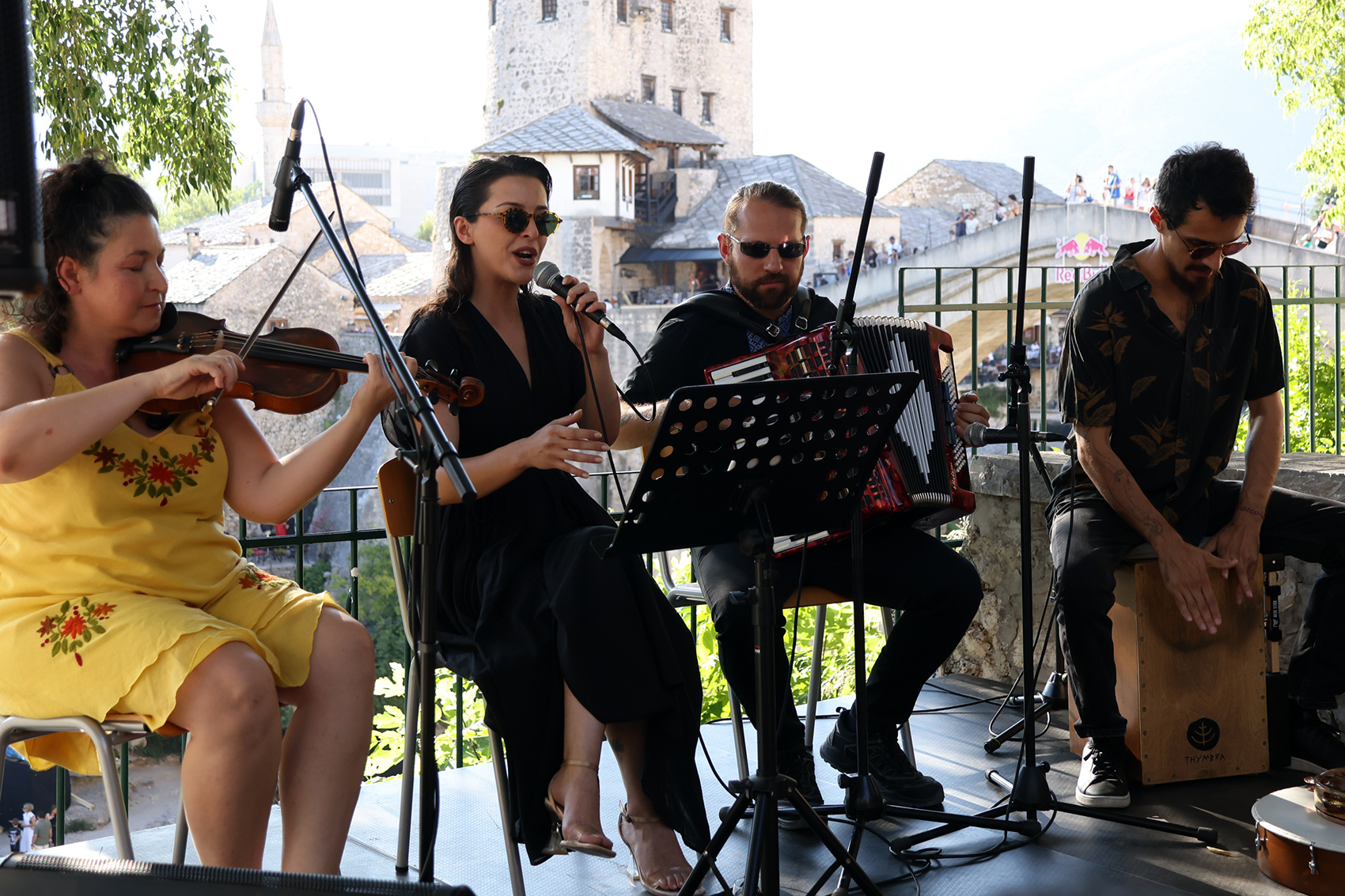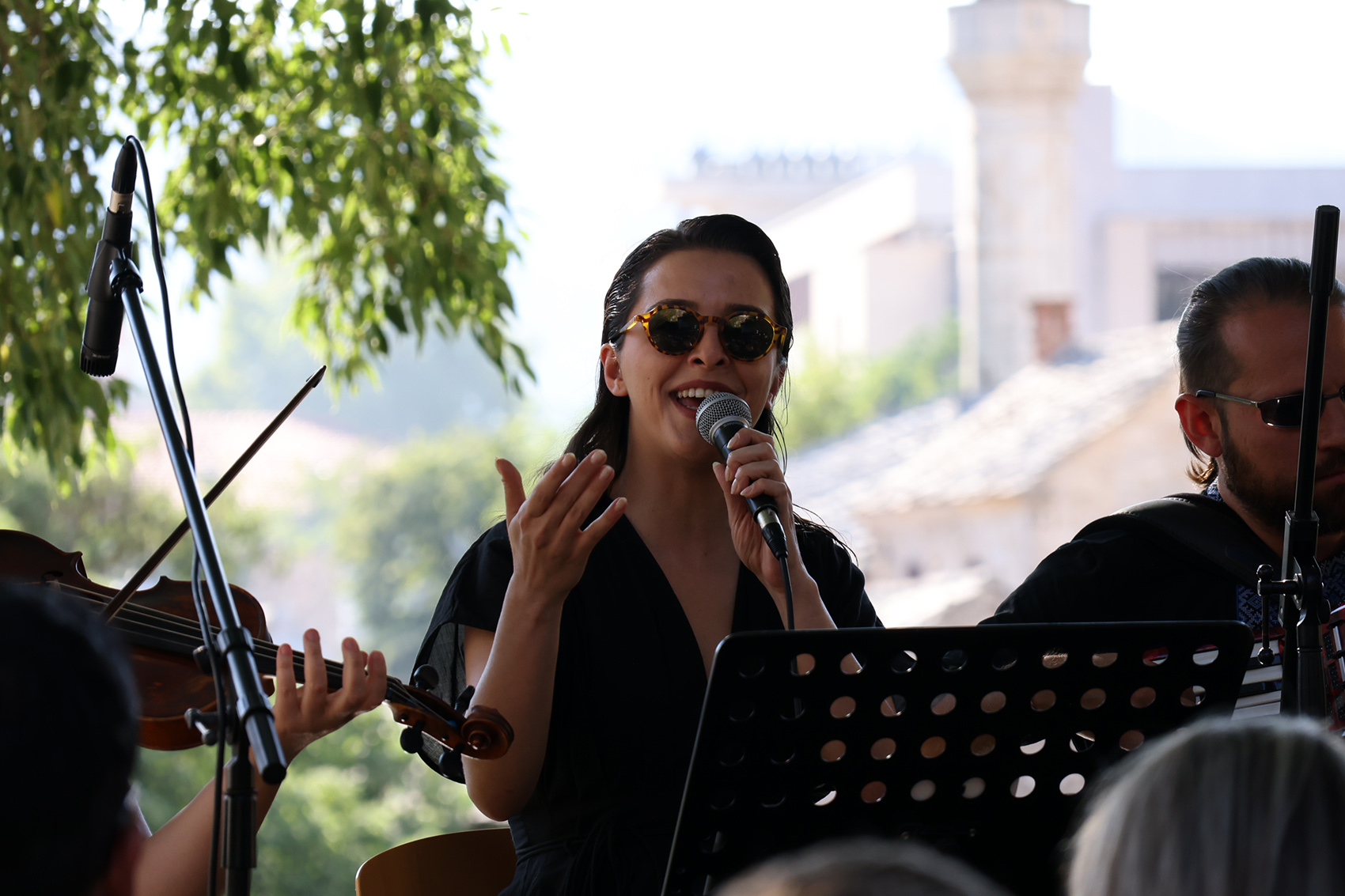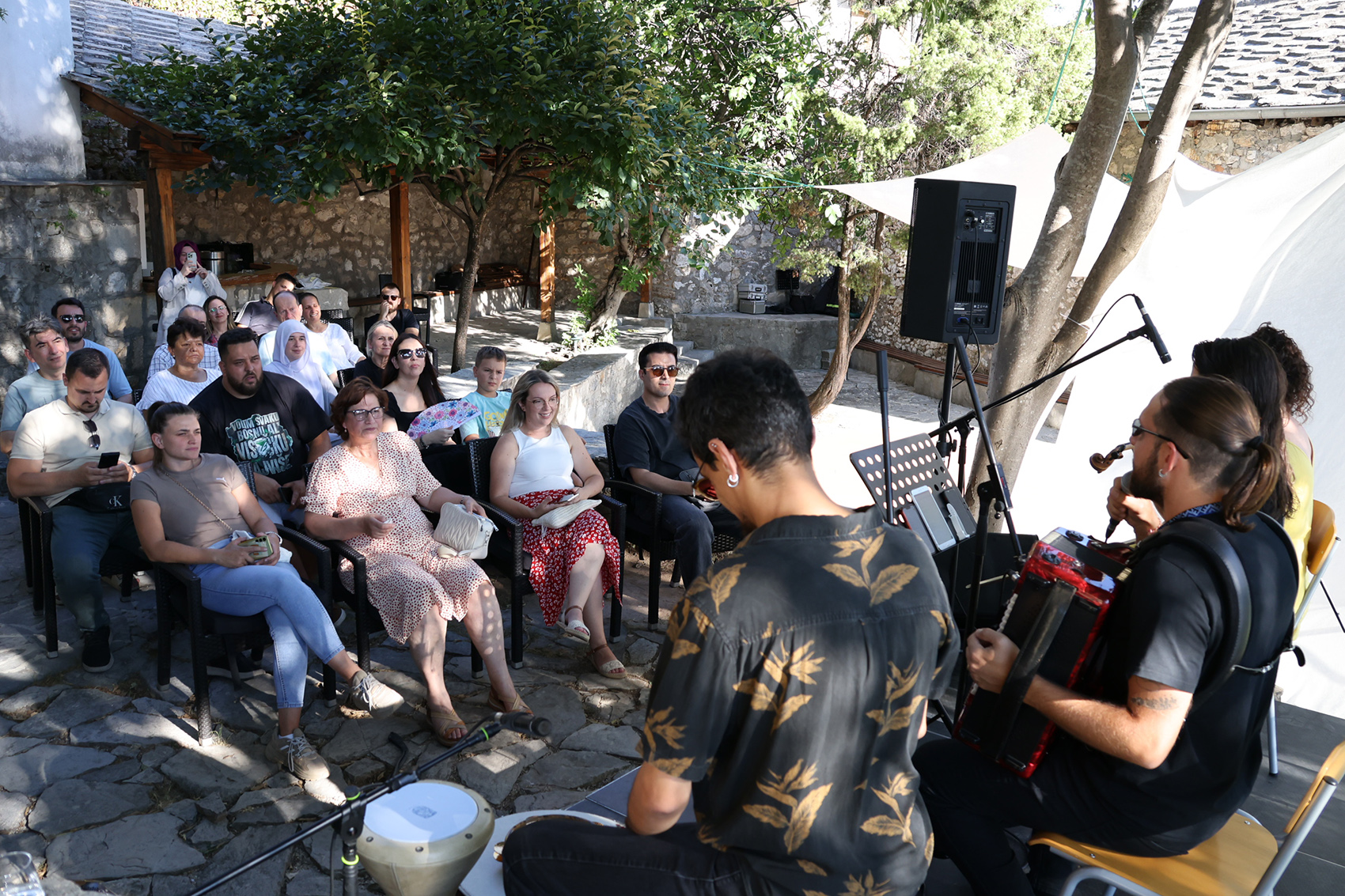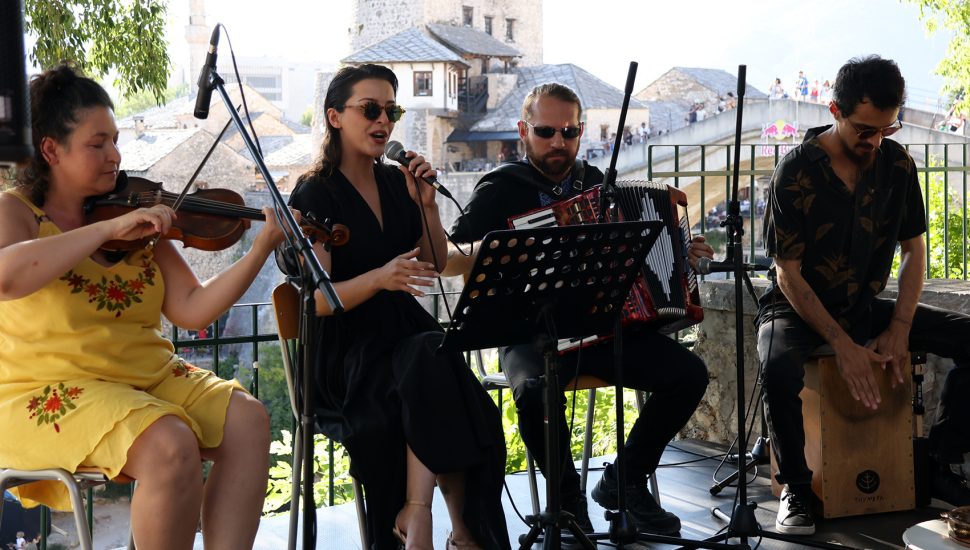
In the beautiful surroundings of the courtyard of the Yunus Emre Institute in Mostar, a concert by the group "Martenitsa" from Turkey was held today, as part of the International Cultural Event "Mostar Summer 2026".
"During my studies in Bosnia and Herzegovina, I was first introduced to sevdalinka and traditional folk music, which sparked a great interest in the rich musical heritage of the Balkans. After completing my studies, I returned to Turkey, where I continued to study Turkish music. That's when I decided to form a band that would unite Balkan, Turkish and Greek music into a single whole."
The main motivation for founding the band came from numerous trips to Bosnia and Herzegovina, Serbia, Albania, Macedonia, Bulgaria and other Balkan countries, during which I noticed that each country mainly performs its own traditional music. That is why I wanted to do something different and connect different musical traditions through one repertoire and show how intertwined the cultures of the Balkans are.
"Mostar is a city with a rich history, through which it has been a meeting place for different cultures, religions and peoples, and a symbol of shared life and cultural diversity. That is why it is a special pleasure for us to perform here. I believe that the Balkans have many more similarities than differences. Our music shows that a common cultural heritage can unite us, and we want the audience to take away this very message after our concerts - that through music we can better understand each other, become closer and build mutual respect and friendship," said Kaan Sancaktar, leader of the Martenitsa group.
The head of the Yunus Emre Institute branch in Mostar, Hilal Karapolat, also expressed her satisfaction with the concert and the importance of such cultural encounters, emphasizing that music represents a universal language that connects people and cultures.
"The 'Martenitsa' group, with its unique interpretation, combined the rich Balkan musical tradition, Turkish makam and contemporary musical expression. Through the sounds of vocals, accordion, violin and percussion, the audience enjoyed a special musical journey that once again confirmed that music connects people, cultures and traditions," concluded Karapolat.
 English
 Croatian
 Bosnian
 Serbian